Across Africa, a wave of military coups has challenged democracy, stability, and development. Some of the most striking examples are those of Mali and Ethiopia, nations with vastly different pasts but similar struggles with power disputes.
The descent into political instability in Mali began in 2012, although the nation was once praised for being a rare democratic success in West Africa. Initial tensions began with the Tuareg, a large ethnic Berber group residing in northern Mali, who began to erupt into rebellions along with Islamist militants, launching an uprising to form their own independent nation. The conflict quickly spiraled out of control and ended up weakening the nation as it allowed for exploitation by foreign competitors.
In response, protests took place around the capital of Bamako, urging for reform as citizens had grown increasingly disappointed with Mali’s corruption, low economic growth, and lack of vital resources. On August 18, 2020, Colonel Assimi Goïta overthrew President Ibrahim Boubacar Keita through the use of a military junta. The coup received public support during its initial days, as citizens saw the military as an engine for change, potentially restoring order within the state. However, after a second coup in 2021, Colonel Goïta concentrated his control and ended up delaying important elections in order to strengthen his hold on power, sweeping his actions under a false front of a transitional government.
The instability of the government allowed for other severe consequences to take place. Extremist groups such as the Jama’at Nusrat al-Islam wal-Muslimin (JNIM) gained power in the Sahel, forcing hundreds of thousands of citizens from their homes. Another outcome that occurred was the severed relationships with foreign nations. French troops were replaced with the Russian Wagner Group to provide security for the Malian government. In response to the junta’s refusal to hold democratic elections, the Economic Community of West African States (ECOWAS) initiated multiple economic and travel sanctions, including the closing of the borders. ECWAS also demanded for the release of the previous president as well as for the appointment of a prime minister.
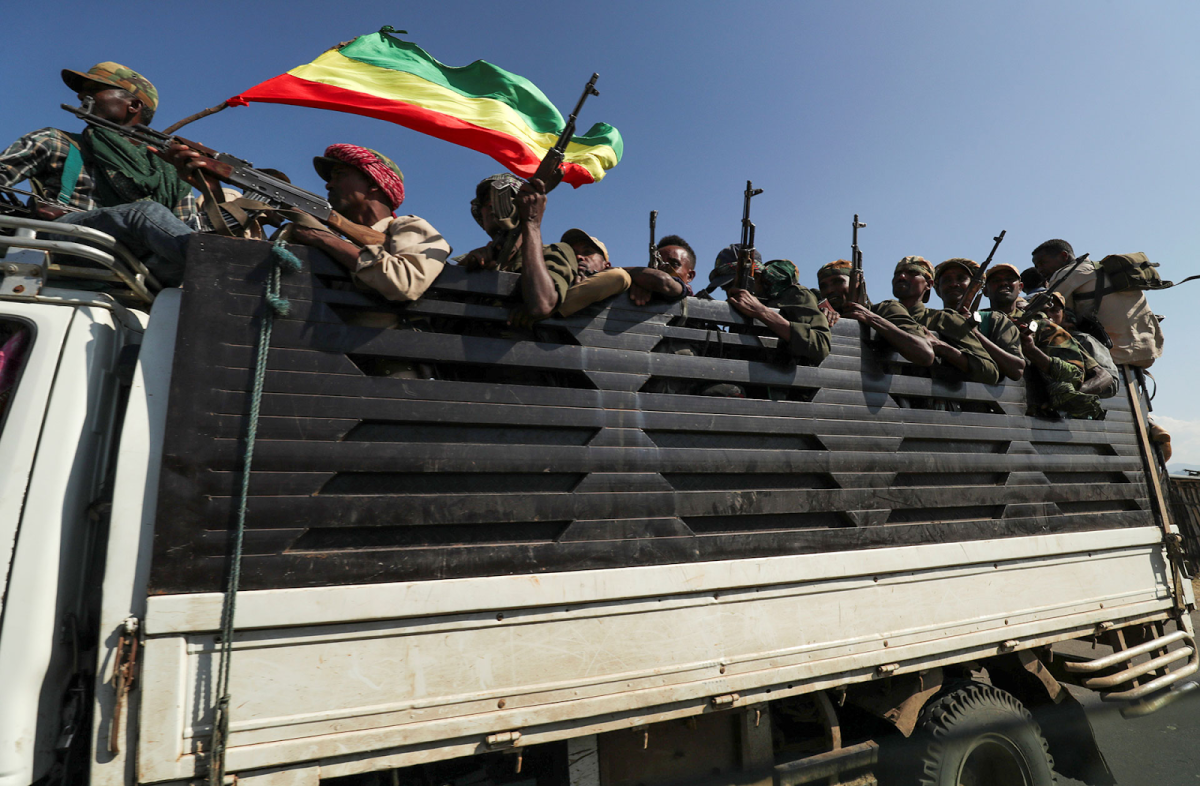
On the other hand, crises in Ethiopia have unfolded with different, but equal levels of complexity. Home to 109.2 million people and various ethnic groups, Ethiopia was ruled by the Tigray People’s Liberation Front, a paramilitary terrorist group that had gained power in the 1960s. Abiy Ahmed, a non-affiliate of the TPLF, was elected as the prime minister in 2018 by promising national unity and a peaceful relationship with neighboring nations; through this, he earned the Nobel Peace Prize. However, the effects of these reforms are worth taking note of. The TPLF’s growing dismay of Ahmed’s reforms led them to attack federal military bases in Tigray. Ahmed’s response to this attack was a full-scale military operation, which ultimately brought the country into civil war.
This series of events led to massacres and famines being brought upon the Tigray. The displacement of millions of individuals, as well as humanitarian aid being cut from entire communities, magnified the effects by a larger scale. Eritrean troops became directly involved in the conflicts as they crossed into Ethiopia to support Federal troops. Soon after, reports of atrocities surfaced. Eritrean troops were accused of ransacking villages, mass killings, and sexual violence against civilions iin the Tigray. Piles of cases were brought to Amnesty International, a global movement of more than 10 million people in over 150 countries and territories who campaign to end abuses of human rights. Amnesty International accused all three sides of committing these inhumane atrocities.
With the persuasion of the African Union, United Nations, and the United States, President Ahmed was urged to end the violence and allow for unrestricted access of aid organizations in order to help suffering regions. In 2022, both Ethiopian officials and TPLF leaders signed the Pretoria Peace Agreement, calling for the disarmament of soldiers on both sides as well as the withdrawal of Eritrean troops. Though this was a national order, concerns regarding the secret use of militias have arisen over the past three years.
Through the conflicts of both countries, it is apparent that fragile governments, foreign involvement as well as grievances of marginalized groups can lead to the collapse of entire nations at a time. The repeated coups in Mali show the consequences that are a result of having too much trust in the military. In Ethiopia, the push for reforms without regarding the inclusion of all high-stakes groups led to one of the worst humanitarian crises in Africa.