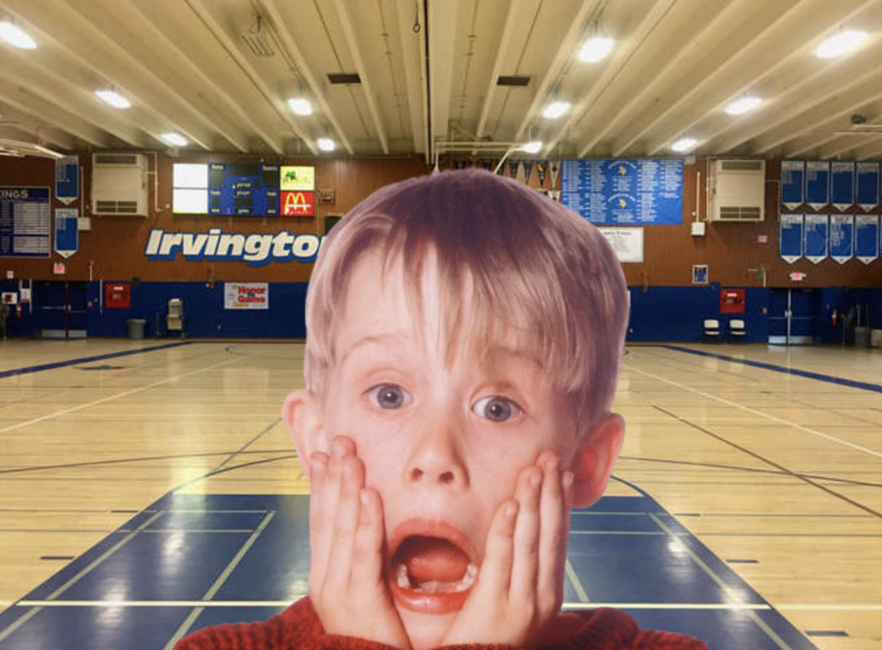

[The scene opens. An IHS Cafeteria lunch line. A student waits impatiently, her nose high. A voiceover begins. ]
Living in the urbanized lands of coastal California, the Irvington High Schooler is an apex predator of the Bay Area region. They are well-known for their pack-like structure, hierarchical system, and, of course, their polyphasic sleep schedule, which has given them the genus name Homo Insomnicus. It’s been four years since our last visit to these majestic creatures. Luckily, today, our National Geographic team of expert biologists will be introducing us to the center of the Homo Insomnicus feeding grounds — known call the ‘Cafeteria.’
National Geographic has been hard pressed in previous years to get a glimpse of this sacred ground, but noble staff were able to hitch a camera collar onto one of the sleeping freshmen during a boring advisory. In accordance with National Geographic’s policy of naming students after their birth certificates, we have dubbed this one Perfatten Dance-Plaguebringer. Lets watch her as she sizes up to her first dominance battle.
Perfatten Dance-Plaguebringer’s (9) eyes widened in affront when she saw a stranger cut in line.
“You can’t cut like that!” she began.
The Original Girl (10) turned around.
“OMG, it’s fine,” she bared her teeth (smiled) in a threatening manner. “I was holding a place for her anyways.”
Dance-Plaguebringer growled, puffing up in order to further emphasize her threat level. A weaker, more submissive freshman may have bowed out in respect to a superior, but she was no ordinary freshman. “That’s undemocratic. I’m going in front of you anyways.”
The Linecutter’s (10) hackles rose, aiming to instill their own hierarchy against this upstart. Her smug look was stony as she refused to budge to Dance-Plaguebringer’s efforts to push ahead. A classic behavior amongst the Homo Insomnicus species known as ‘non-chalance.’
Dance-Plaguebringer gave her an owl-eyed look.
And then she lunged to rip off her meal rival’s arm.
Homo Irvingtonius is the apex predator of the school scene, but that does not mean they are without competition. Within overall packs known as ‘grade levels,’ the Homo Insomnicus is also known for making smaller packs called ‘clubs.’ Let’s take a look to see one inter-club territorial conflict occur in a contested mass known as Valhalla. Notice how the one club alpha bares his teeth to the other lead, a signature warning that he could tear out his competition’s throat if provoked. In return, the other takes a step back, indicating their own submissiveness. The video quality of this fascinating scene is shoddy, as our higher-level cameras were removed by high-ranking Homo Insomnicus in the region for being ‘predatory.’
The Bouncy Ball Club President stepped before the rest of his club, indicating his leadership position as the rest of them circled in the background, ready to fight.
“Listen, ASG could not be more clear — we booked Valhalla for the Bouncy Ball Club first,” he proclaimed.
The other club leader shook his head. “Yeah, but the Irvington Salsa Club rents the room every Thursday — everyone knows that.”
“Uh-uh. No. You should’ve signed up!”
The Irvington Salsa Club leader could no longer argue. Frustrated, he decided to surrender, rubbing his pheromones with the dominant club leader to show his subordinate status (they shook hands).
Life isn’t all violence with Irvington High students. These students are also capable of courting mates (friends) as well. In order to show interest, these fascinating organisms will go on shared hunts (studying for tests together), create courting noises with each other (gossip on the phone), and participate in altruistic behavior (for extra credit). See here, as we pan a myriad of examples.
In Irvington High School, survival depends on the aid of a pack, with lone organisms seldom surviving the harsh environment. But as these magnificent creatures have shown us, even in difficult times a species can prosper in this land of biodiversity. Be sure to join us next time on “National Geographic.”