Author’s Note: this article was written in the first week of April. Since then, some details may have changed surrounding this conflict.
It has been almost a month since the Iran-American conflict started, and many citizens remain uncertain about the future of social, economic, and political stability worldwide. Citizens around the world have been united in uncertain geopolitics, a loss of life (throughout the Middle East), as well as worldwide economic impacts. This conflict remains an unstable one, with views divided among American people and the government. Many remain unsure of the reasoning behind the war, what its goal is, and when it will end, and as a result, public opinion of the war continues to shift.
Establishing the reasoning behind this war is difficult, due to what is being reported and what is not: the Israeli Defense Minister Israel Katz stated the attack on Iran was done in due interest of removing threats against the state of Israel (New York Times). Despite America’s secretary of state, Marco Rubio, agreeing and stating similar reasons for the initial attacks that struck Tehran and took down Iran’s former Supreme Leader, Ali Khameini, there may be other reasons for this conflict that have not yet been brought to light (BBC).
Israel and the United States have been opposing Iran’s nuclear program ever since the establishment of the Iranian regime back in 1979. Furthermore, they have stated that they worry about Iran holding nuclear weapons, though not enough proof has been given for this reasoning (BBC). Overall, America and Israel continue to worry about Iran’s power in the Middle East as an anti-western force and question the impact Iranian power has on their sovereignty (BBC). Although Khamenei’s rule has significantly affected citizens’ rights and freedoms since 1989, it is clear that Israel and the United States did not overthrow Khamenei for this reason. This conflict is a geopolitical one, seen with the targeting of areas across the Middle East, as well as the impacts this conflict is having on world economies. Altogether, these details reflect that the overthrowing of Khamenei does not seem to be in the due interest of Iran’s citizens.
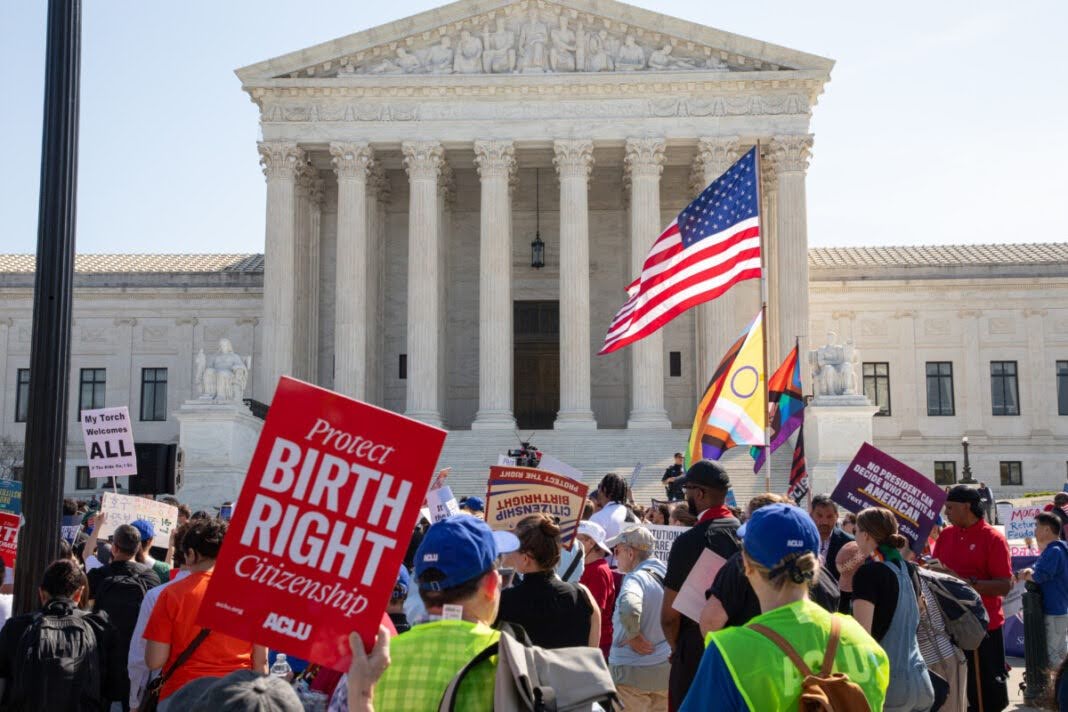
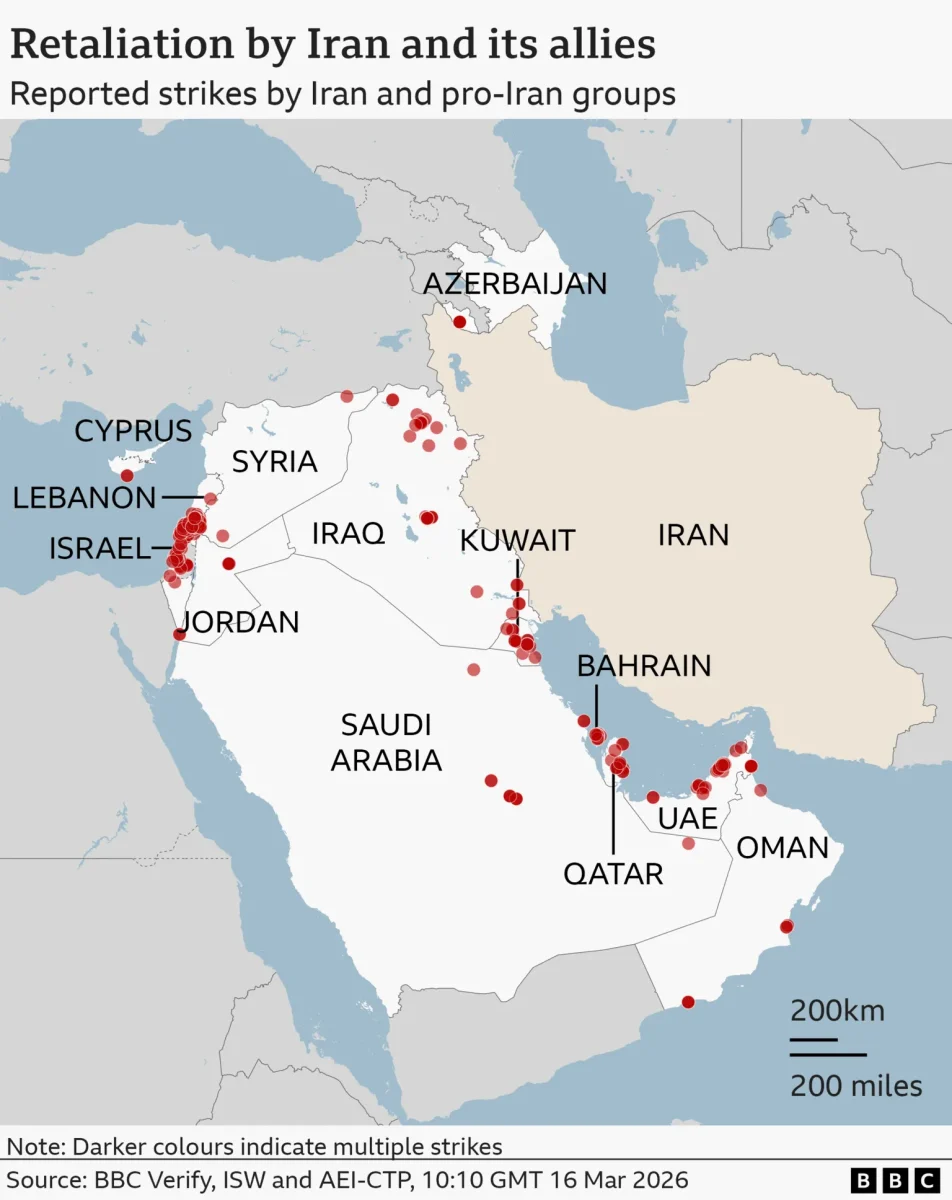
Since the start of the war, Iran and its allies in the Middle East have retaliated against Israel and American bases in the Middle East, killing thousands Middle Eastern citizens as well as a few American service members (CBS). As the war escalates, there has been no sign of negotiation from either side. And as the war escalates, Iran has been accused of targeting oil and gas facilities, as well as civilian sites in the Middle East, especially western allied-Middle Eastern countries. The United Arab Emirates (UAE), Palestine, and other countries have been affected by the growing conflict. Furthermore, Israel has attacked Lebanon as a means of “keeping control in the region” as stated by the BBC, though over 1000 people have died (BBC). Furthermore, many economic sites are being impacted — Iran has reportedly shut down the Strait of Hormuz, a region that is responsible for manufacturing 20% of the world’s oil, which has led to further escalation of the war (BBC). It is clear that this war is impacting citizens of neighboring countries. It is impacting Americans in other ways, showcasing the lack of trust people have in the economy. As of now, 45% of Americans remain “extremely” or “very” concerned about being able to afford gas due to rising energy prices (PBS). Furthermore, ordinary citizens remain concerned about Trump’s use of military force, reflected by CNN when it reports in a survey that 66% of citizens disapprove of military action in Iran even before he gave an address on March 27 to address the war. The economic impacts of this conflict is clear: energy sites in Iran are being attacked, and so are other important economic and militant sectors across the Middle East (BBC).
It is clear that at the end of the day, this war has no ending in sight just yet, though the war continues to change in severity (New York Times). Despite the fact that NBC reports that there were talks for a ceasefire on April 10, the Trump administration still remains displeased at the Strait of Hormuz being closed as a result of the strikes on Iran, and agreements are proving difficult to reach with conflicting viewpoints (NBC).
Escalation continues to grow with brute military force across the Middle East. The areas that are primarily being targeted are economic hubs, including oil sites. Civilians across the Middle East are dying due to uncoordinated attacks, as well as US service members, though the death toll estimates stand at around 3400, most of who are civilians (NBC). As this war continues, it is important to understand that this war does not seem to be reaching American soil — rather, we have become a victim of the indirect impacts of Trump’s foreign policy. The Iranian war is not being paid in lives in America specifically, but rather in rampant inflation that has become unpopular (PBS).
In these telling times, it is important to understand that Israeli, American, and Iranian viewpoints on this war are divided, and that bombings are occurring sporadically across the Middle East, impacting livelihoods.
Across the west there have been no direct impacts of the war, but oil prices across Western sectors continue to indirectly impact world economies. On the contrary though, across Iran and the Middle East, citizens feel direct impacts of the war, such as the reported U.S. Missile that hit a school in Minab, Iran, killing 175 children and teachers (New York Times).
It is important to divide spoken word by fact: why this war started versus what is being reported by the Israeli and American governments do not necessarily parallel each other or are 100% certain. Furthermore, as geopolitics shifts rapidly, the severity of the war oscillates.