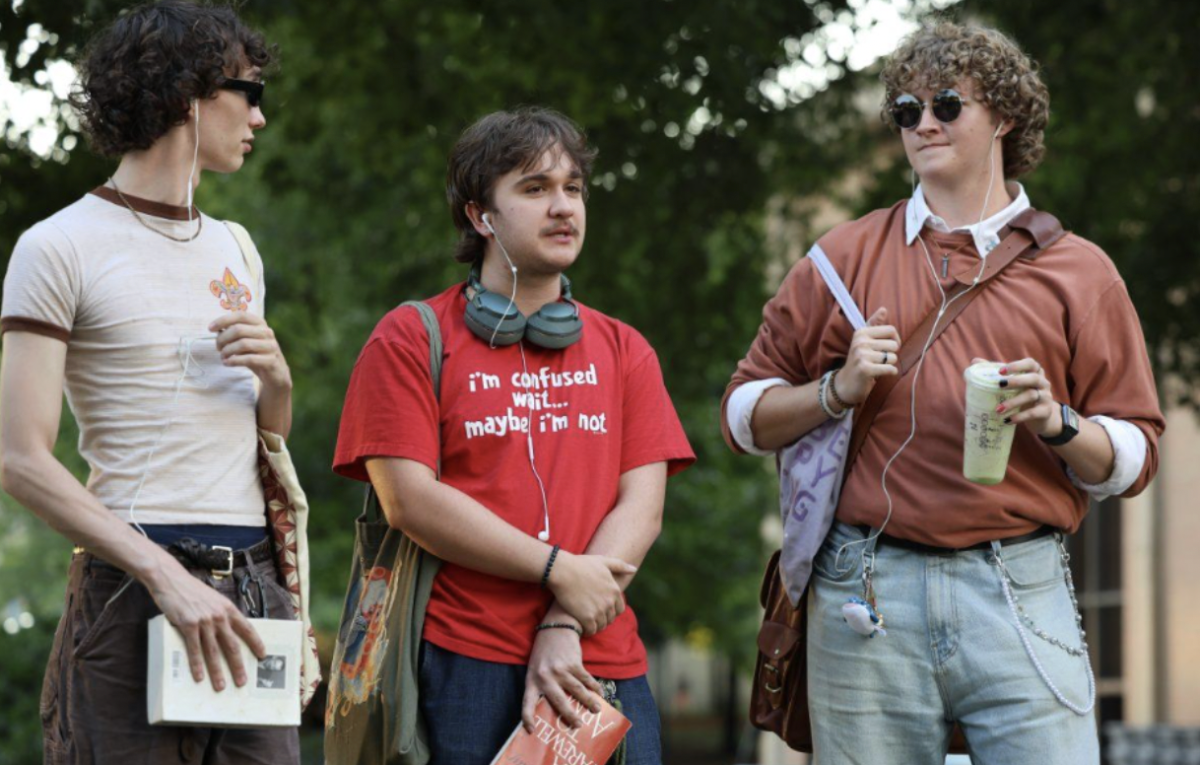

The “performative male” has become the internet’s newest character: a man who drinks matcha, carries a tote bag, quotes trendy books, and makes playlists to show off his tastes. What makes him “performative” isn’t the objects themselves–it’s how he uses them to appear more desirable. Like influencers curating perfect feeds or politicians staging relatable moments, the performative male reflects a larger cultural shift: today, authenticity is often overlooked in favor of image. This can be harmful because it suggests that value comes from appearances rather than genuine interest, making identity feel more like a performance than real self-expression.
The trend took off on social media through jokes, memes, and viral videos. On TikTok, men adopt the performative male aesthetic to rack up likes and followers, curating videos of coffee shop routines, carefully arranged bookshelves, or playlists that signal cultural literacy. These behaviors often prioritize attention over genuine interest, with users engaging in trends and adopting aesthetics they may not personally enjoy, simply because they gain visibility and validation (Business Insider, 2025). In this way, the performative male on TikTok reflects a culture where appearing desirable and “in the know” can take precedence over authentic engagement.
At first, this might seem like harmless fun. People have always performed in some way–whether it’s dressing up for a job interview, acting extra polite at family dinners, or putting their best foot forward on a date. But social media has changed the rules. What makes this moment different is the scale and speed of social media. The digital stage makes performance constant, visible, and measurable. A curated bookshelf or outfit can rack up more validation than the genuine enjoyment of reading or the comfort of personal style. The result is a system where image is rewarded more consistently than authenticity.
Over time, this can breed distrust: audiences question whether someone’s tastes are real, while individuals doubt whether their own choices reflect desire or pressure. For example, TikTok influencer Anna Paul lost hundreds of thousands of followers after being accused of presenting herself as a body positivity advocate while allegedly engaging in deceptive practices, showing how performative actions can quickly backfire.
This shift comes with costs for the performers themselves. When the main goal is to appear desirable, hobbies, tastes, and even relationships risk becoming superficial. A book can turn into a prop, and music into a checklist. While some argue that performance can be playful or a means to experiment with identity, the danger arises when performance itself becomes the sole focus. Documentation of performative males reveals that rewarded behaviors are often curated, rather than genuinely chosen.
The societal impact extends beyond performers. Lines between real and fake blur, and men who genuinely enjoy tote bags, matcha, or indie playlists are written off as performative, making sincere self-expression harder. Instead of broadening how masculinity can be expressed, performative culture risks flattening it (The Week, 2025).
Another consequence of performative culture is the toll it can take on mental health. Constantly curating an online image creates pressure to maintain appearances, even when it doesn’t reflect reality. Research has linked image-based posting with higher levels of anxiety, depression, and self-doubt among young people. For instance, a 2024 study from BMC Public Health found that adolescents who focus heavily on their self-presentation online reported more symptoms of depression and anxiety. Similarly, a 2022 article in Frontiers in Psychology showed that self-behaviors were strongly tied through constant comparison with others. The stress of appearing interesting, cultured, or desirable can overshadow genuine enjoyment of activities. Instead of serving as a tool for connection, performance turns into an exhausting cycle of comparison and self-monitoring, leaving people feeling less authentic and more insecure.
In the end, the performative male is just one example of how performative culture shows up in daily life. The real challenge isn’t to stop performing altogether, but to choose consciously what kind of performance we want to put out in the world–and whether it reflects something real.