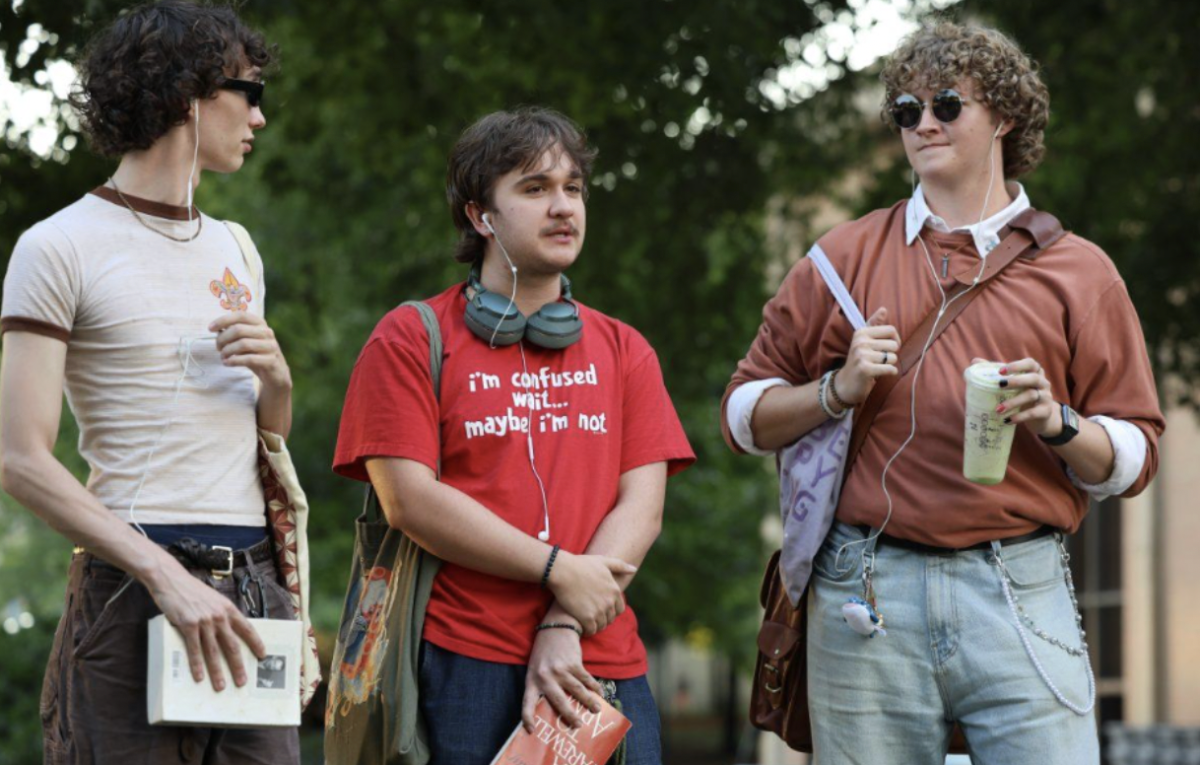

March, 2025. Roy Chungin Lee was kicked out of Columbia University. What happened? Rather than anything particularly detrimental to school life, Lee simply created a startup. Lee founded Cluely, an artificial intelligence tool that aided in perfecting interview questions real-time. To prove its effectiveness, he posted his successful interview with the large corporation Amazon on Youtube. However, he faced immediate backlash, receiving a suspension for promoting a cheating device. But rather than returning thereafter to continue higher education in a prestigious school that was bound to land him a six-figure salary in the future, he chose to cultivate his startup full-time and drop college.
The sequence of events and its subsequent consequences raises a question about the traditional educational pathway students have been following for centuries, and whether or not it is still applicable in a modern setting. Students like Lee have been straying away from the beaten path, opting to create startup businesses over getting a degree. As such, forsaking higher education to pursue a startup is not beneficial to both the individual and collective society, though it can be beneficial in the context of balancing the birth of innovation and preservation of reliable ideas and processes.
The first issue of note is the inability of the preexisting academic traditions and pathways to keep up with the ever-changing dynamics of postindustrial societies—from the digital era to the coming of the Fourth Industrial Revolution, spearheaded by the transformation of artificial intelligence. The unprecedented changes means there is a perceived massive jump in individual opportunities in the workforce. What success, innovation and personal growth mean to a society have changed as culture evolved. Specifically in Silicon Valley, the dense and culturally diverse population fosters a competitive mindset in students, which pushes students to be ambitious, and even reckless, leading some to stray away from higher education.
These unprecedented changes to society, including the Coronavirus pandemic also had the side effect of further digitizing our lives. As such, it is easier to communicate with others—to influence others over the internet. For example, the story of Roy Chungin Lee doesn’t end with his expulsion. The startup he threw away university for, Cluely, is allegedly worth around 120 million dollars. While this makes startups seem like easy paths to quick cash, the truth of the matter is that success is often over-reported—Over 90% of startups fail. Moreover, the Education Data Initiative finds that college dropouts are 100% more likely to be unemployed than any degree holder, and, among the employed, make an average of 35% less income than bachelor’s degree holders. So then, why does it seem like there are so many success stories like Lee? Despite information being widely available, survivorship bias means that not all information people consume is perfect. The few stories of people striking gold are massively outweighed by the unreported masses—many who fell short in pursuit of this goal. We hear about Mark Zuckerberg and Bill Gates being Harvard University dropouts, CEOs and entrepreneurs who risked it all and now own billions of dollars in wealth, but fail to comprehend just how small a percentage of people they make up not only in society, but even among successful entrepreneur-dropouts.
The traditional educational degree pathway is a safety net that has had centuries of evidence backing its ability to provide a stable life. College is an opportunity to form a community; It puts an individual with many people of varying cultures and mindsets—without requiring any extra effort at all. Dropping out of college is losing the opportunity to connect, but more importantly, losing the opportunity to take cautious steps in becoming a functioning member of society, with informed figures to help guide every step of the way. The final piece of paper received at the end serves as the most clear possible proof of an individual’s abilities and qualifications to businesses. As such, the price tag associated with college is most often negligible compared to the massive benefit received by staying in higher education.
An individual’s future and income depend wholly on their choice to drop out of college. It is very difficult to find a proper direction afterwards, no matter how ready one may feel coming into the situation. While the message here is to be conservative to an extent, it is important to understand that there are definitely more sides than one on the topic, because the benefits it has overall to the progression of a society are undeniable.
The diversity of populations in cultural backgrounds and viewpoints is a proponent of a well-tuned society. Having a balance between some who do take this path, and those who won’t, generates both innovation and recognition of the reliability of existing systems and technology. The idea is, someone has to take the risk. Maybe dropping out of college to make an idea a reality is the right choice in a specific instance, but it’s definitely undeniable that the path to change and development is not a clean or straightforward one. There will be some figurative and literal casualties. This constant pursuit for innovation motivated by economic opportunity is at the heart of capitalism as we know it and is the one thing that does not change, lest the United States loses its government structure.
So while an insane idea might be worth looking into, it is virtually certain to be just not worth dropping college for.