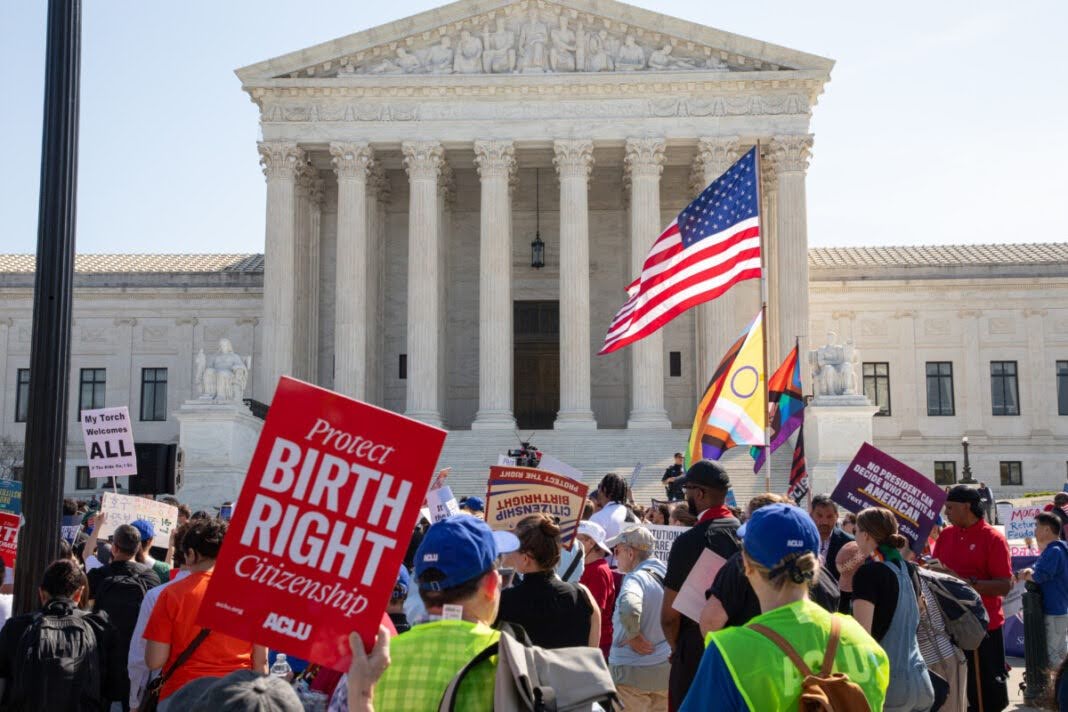

Across the United States, thousands of people face harsh punishments for minor drug-related offenses, even when their actions cause no direct harm to others. In U.S. v. Hemani, a case now before the Supreme Court, the deep flaws in America’s approach to drug enforcement are exposed, where individuals can be punished not for what they do but for what prosecutors assume about their behavior. The defendant, Ali Danial Hemani, a Pakistani convenience store owner, was charged under section 922(g)(3) of the Federal Gun Control Act after an FBI raid found him in possession of a firearm, while he admitted to regular marijuana use. This statute prohibits firearm possession by anyone who is an unlawful user of or addicted to any controlled substance.
If the justices vote to uphold section 922(g)(3) broadly, the division will reinforce the government’s power to disqualify individuals from gun possession based on their drug-use states, potentially affecting millions of people in states where marijuana is legal but remains a federally controlled substance. If the Court rules instead that the statute as a 2nd Amendment violation, cannot be applied without proof of present impairment or immediate risk, it will protect many citizens from punishment based on assumed intent rather than actual dangerous behavior.
This case highlights the need for U.S. drug and firearms policy reform. Laws must be more precise, enforcement must focus on real public safety threats, and prosecution should be based on concrete evidence rather than assumptions.
This law gives prosecutors wide discretion to decide who counts as an unlawful user. People can face prosecution even if they are not under the influence when they possess a firearm and may have no involvement in traditional drug trafficking. Because marijuana is still classified as a Schedule I drug under federal law, even individuals using it legally in their state can fall under the statute. This broad authority puts ordinary business owners at risk of federal prosecution based on assumptions rather than actual criminal behavior.
Furthermore, the law is applied unevenly. Small business owners, immigrants, and minority communities often face the harshest consequences. Drug-related arrests disproportionately affect Black and Latino communities compared to white Americans. For example, according to the ACLU, Black people are almost four times more likely to be arrested for marijuana possession than white people, even though usage rates are similar.
The origins of such injustice go back decades. John Ehrlichman, a senior aide to President Nixon, admitted the political motives behind the war on drugs, saying, “We knew we couldn’t make it illegal to be either against the war or Black, but by getting the public to associate the hippies with marijuana and Blacks with heroin, and then criminalizing both heavily, we could disrupt those communities.” The Hemani case continues this pattern. While large corporations selling similar legal items face little or no consequence, a minority-owned, locally run store was prosecuted, highlighting how enforcement often targets those with fewer resources and less influence.
Instead of punishing ambiguous behavior and relying on assumed intent, U.S. drug and firearms policy should emphasize clearer legal definitions, public health approaches, and harm reduction. Countries such as Portugal, which have decriminalized drug possession, have seen overdose deaths fall by more than 80% and incarceration rates for drug offenses decrease by around 43%, demonstrating the effectiveness of a public-health-focused approach. Narrowing the definition of drug paraphernalia and clarifying enforcement rules in the U.S. could prevent cases like Hemani’s and ensure prosecution targets actual criminal conduct.
Supporters of strict enforcement argue that laws like section 922(g)(3) are necessary to discourage illegal activity and protect communities from the combination of firearms and substance use. They claim that relaxing enforcement could increase drug use or trafficking.
However, decades of evidence show that punitive laws have not significantly reduced drug use or trafficking. A 2018 analysis by The Pew Charitable Trusts found no statistically significant link between higher rates of drug imprisonment and lower rates of drug use or overdose deaths. Meanwhile, the Vera Institute of Justice reports that in 2015, more than 52,000 Americans died of overdose, and 84% of drug arrests were for possession rather than large-scale distribution. These laws have filled prisons with nonviolent offenders, diverted resources from prevention and treatment, and disproportionately impacted minority communities. Real safety comes from education, treatment, monitoring, and clear legal standards rather than criminalizing intent. Reform would allow law enforcement to focus on genuine threats while protecting small-business owners and ordinary citizens from unfair prosecution.
U.S. v. Hemani underscores how outdated, vague laws allow people to be punished for what they might have intended rather than for what they actually did. The Supreme Court’s decision could shape the boundary between legitimate regulation and unjust assumption-based criminalization. America must move toward a legal system that distinguishes between crime and circumstance, ensuring that justice depends on evidence and not on speculation.