
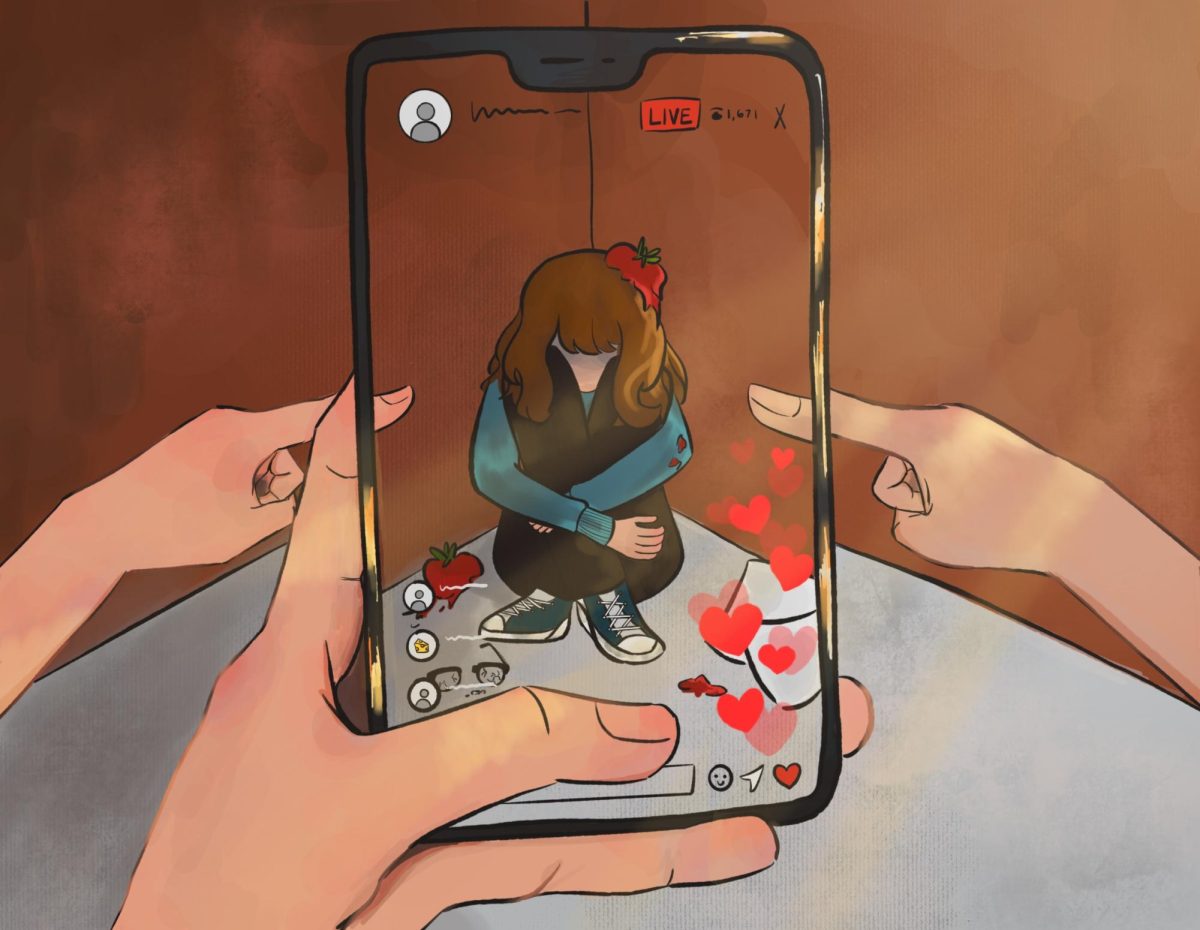
In today’s digital age, people are more prone to sharing their opinions than ever before; but somehow this prevalence doesn’t include showing empathy. Social media platforms like TikTok, Instagram, and X (formerly Twitter) allow for millions of users to like, comment, and repost content without understanding the full story. Quick previews of judgement are to be taken as fact, leaving no room for nuance or empathy. Our world has become connected through online networks to the point where a single post or clip can erupt into viral outrage.
Social media platforms encourage people to form instant opinions. On TikTok, a 10 – second clip of one’s opinion can go viral for simply attracting a couple of like-minded viewers. But when someone posts something that’s misunderstood or taken out of context, users will often rush to cancel them. The anonymity that many users have makes this situation even more prevalent. For example, in 2020, Emmanuel Cafferty, a middle-aged Hispanic man who worked for San Diego Gas & Electric (SD&E), was fired after a stranger posted a photo of him online. The picture, taken while Cafferty was driving his company truck, appeared to show him making an ‘okay’ hand gesture, which the person who posted it claimed was a white power sign. In the aftermath, Cafferty struggled to find work, explaining that “The first thing an employer does when hiring is put their name on Google.” His name, now permanently linked to accusations of racism, shows how quickly the power of social media and connectivity can destroy a person’s reputation. Hidden behind creative usernames and screens, people feel more free to say things that they’d never dare say face-to-face. The lack of accountability that stems from these actions fuels harsher criticism and quicker judgements that spread faster than the truth. In a culture that fosters speed and outrageousness, compassion becomes a lower priority.
Public shaming also thrives on online platforms as it distances people from real emotions. Instagram users exercise their free will by mocking one’s accent, mental health struggles, appearance and much more; But what they tend to forget is the fact that there is a real human behind the screen. Although this behavior isn’t excusable by any means, it’s prevalent because of the lack of face-to-face interaction, making it easier to ridicule others. Cancel culture has turned shaming into a form of entertainment, and is even viewed as a form of social justice by certain individuals.
However, some can argue that public criticism encourages people to be more responsible and promote accountability. That may sound fair, but accountability means nothing when people don’t understand the depth of their actions and aren’t given the chance to grow from them. Today, accountability is used as a cover for normalized humiliation and creates fear rather than fostering growth. Recognizing one’s mistakes and fixing them should be seen as a sign of empathy, which is what should be put into play on both sides: the original user and those who don’t agree. But apart from having controversial opinions, people are being shamed for being their authentic selves, just because their choices don’t align with the masses.
To rebuild empathy online, the future generations need to develop the habit of slowing down before judging. Schools should teach digital literacy so students learn to think before reacting. Social media platforms such as Instagram can introduce “pause before you post” reminders, so that people have the opportunity twice before they post on social media. When our opinions are backed up or altered by empathy, society as a whole grows stronger and becomes more compassionate, allowing our voices to avoid division, rather than facilitate it.