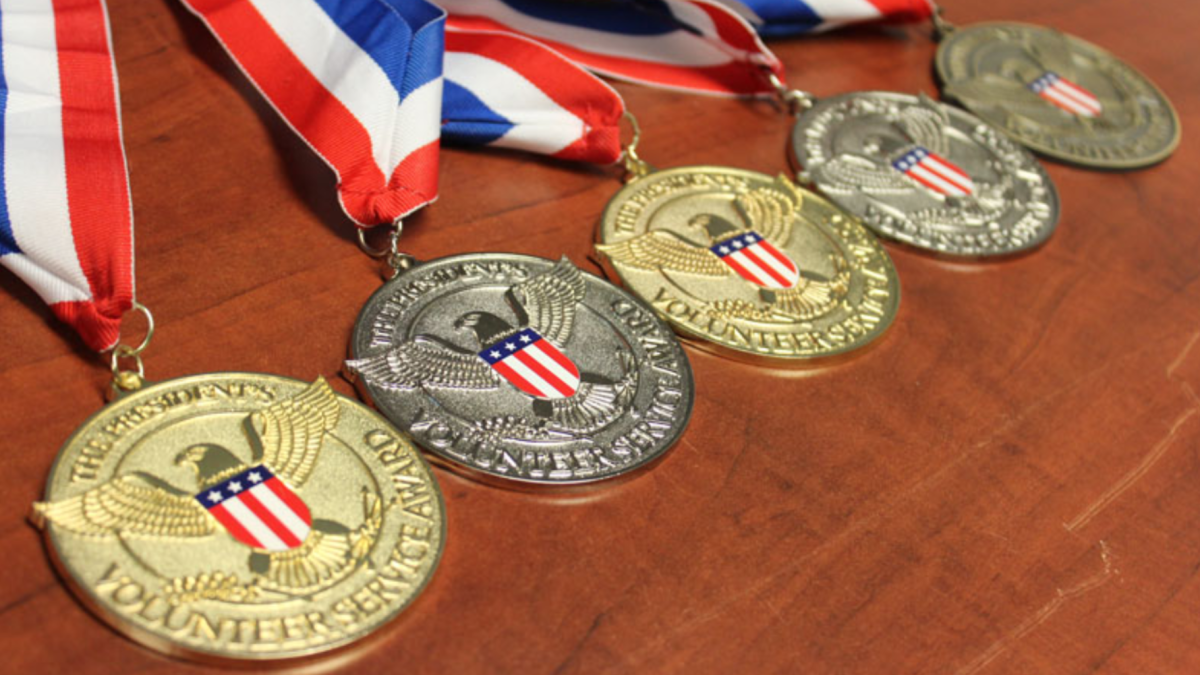
After the Presidential Volunteer Service Award (PVSA) was paused indefinitely on May 27 this year due to federal budget cuts to AmeriCorps, service clubs at Irvington entered a year where they could no longer continue the PVSA programs they had just begun building. While the national suspension affects schools across the country, its impact is particularly noticeable at Irvington, where clubs were only recently integrating PVSA into their recruitment, hour-tracking, and recognition systems.
PVSA, created in 2003, traditionally honored volunteers with tiered awards — bronze, silver, gold, and lifetime — depending on the number of hours logged within a 12-month period. For Irvington clubs, the program served as a way to provide formal recognition, strengthen publicity, and give students a structured goal to work toward as they accumulated service hours required for graduation of club distinctions.
Key Club, one of Irvington’s largest and most active service organizations, introduced PVSA to its members for the first time 3 years ago. “We only had three recipients last year,” said Jason Ngo (12), Key Club’s vice president of logistics. “But we were really excited to expand it, publicize it more, and bring more people in with the incentive of earning a national award. The pause happened right as we were trying to build on that momentum.”
Because Irvington’s PVSA efforts were still new, the suspension didn’t unravel existing traditions so much as it interrupted the plans clubs had been preparing to roll out. Ngo explained that while the club didn’t have to overhaul its systems immediately, it could no longer rely on PVSA as a marketing point. “It was definitely an incentive we couldn’t provide anymore,” he said. “We’d wanted to grow it and feature it in our recruitment, but with it paused, we had to pivot our publicity strategy.”
Ngo noted that dues-paid membership has dipped this year, though he emphasized that it’s unclear whether that’s related to PVSA or simply normal fluctuations. “I don’t want to claim the pause caused everything,” he said. “But PVSA was definitely something we highlighted last year to attract new members.”
Even so, Key Club’s event turnout has remained strong, and general meeting attendance is still high. President Elaine Peng (12) attributed this stability to the club’s existing recognition systems. “We’ve always had other ways to acknowledge people,” she said. Member of the Month awards continue, complete with certificates, shout-outs, and meeting slides. On a broader scale, the districtwide Membership Recognition Program (MRP), with service tiers from bronze at 50 hours to platinum at 200, still gives students a structured pathway to earn distinctions.
The club’s hour-tracking system has also stayed consistent. Key Club officers continue submitting monthly service reports documenting how many members attended events, how many hours they earned, and how many total hours the club contributed. “It’s the same system we used before,” Peng said. “The only difference is that those hours don’t go toward PVSA anymore.”
Irvington students say that losing PVSA hasn’t fundamentally changed why they serve. Many explained that while the medal was a nice incentive, the meaning of volunteering comes from the experiences themselves. Brayden Fung (10), who regularly attends events with friends, said the pause didn’t affect his motivation. “I wasn’t volunteering for an award,” he said. “I do it because it’s fun and it feels good to help people.”
“I volunteered at this church once, and everyone there was just so grateful,” said Claire Wong (11). “They kept telling me how glad they were that I showed up, and it made me feel really needed. Moments like that remind me that what we do actually matters to people.”
Clubs are also maintaining their relationships with community partners built over previous years. Ngo explained that Key Club continues working with local libraries, cultural centers, and organizations like the Southern Alameda Buddhist Church. “We formed a lot of new connections last year,” he said. “We’re still continuing those events and keeping those partnerships strong.”
Although PVSA remains paused, AmeriCorps now directs volunteers towards national recognition alternatives such as Points of Light or the Congressional Award. Whether PVSA will eventually return is uncertain, but Irvington’s service culture has remained steady.
“Award programs help,” Peng said, “but at the end of the day, service clubs stay strong because people enjoy being part of something. They like working together, hanging out with friends, and doing something positive. That doesn’t go away just because PVSA did.”
Students across clubs echoed the same sentiment. The value of service comes from connection and impact. So, with or without PVSA, they plan to continue to show up.