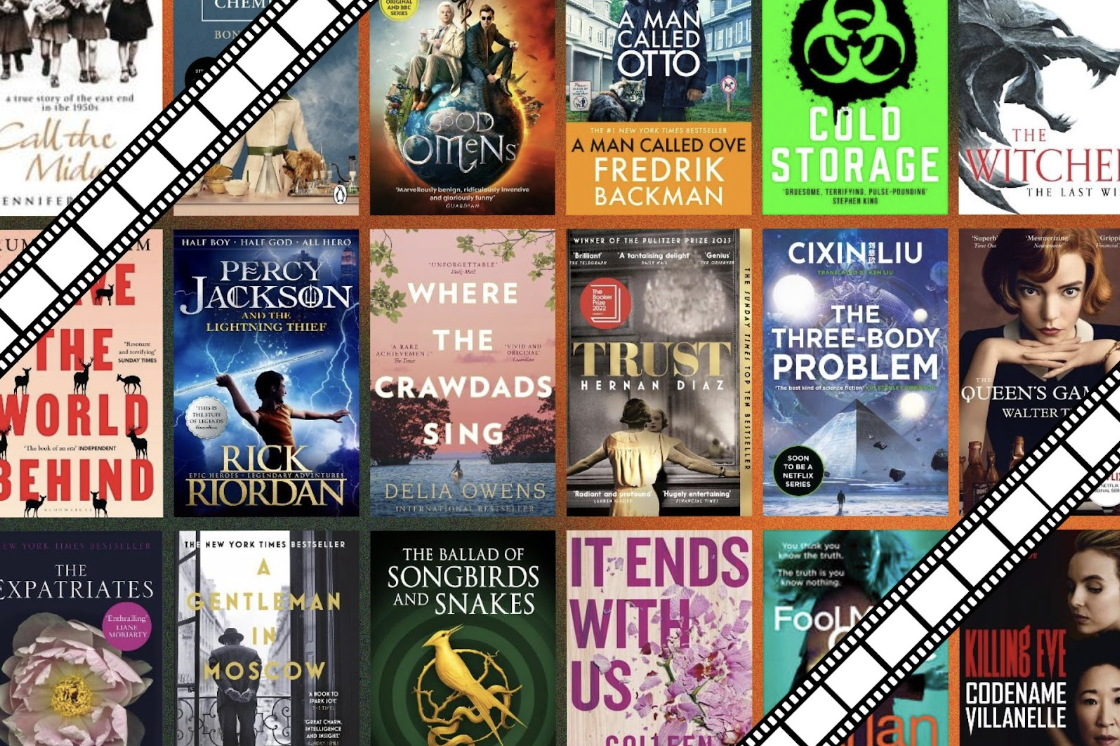
Book-to-screen adaptations are exciting because they let us see the stories we love come alive, but sometimes what made them powerful on the page gets lost in translation.
There’s nothing quite like the thrill of seeing a beloved book come to life on screen. Whether it’s a cinematic spectacle or a streaming series, adaptations can let us finally visualize the worlds and characters we’ve only imagined. Nobel laureate Kazuo Ishiguro explained that adaptations aren’t just reproductions — they’re new artistic expressions, and when done well, they can keep stories alive across generations.
And yet, despite the excitement, too many adaptations fail to capture what made the source material emotionally and narratively powerful in the first place. Novels have the luxury of exploring inner monologue, detailed character motivation, and layered themes that simply don’t translate cleanly to film or television.
One of the biggest challenges is that books can convey what characters think and feel, while movies and TV shows must rely on dialogue and visuals. Adaptation experts note that novels average 80,000–100,000 words, whereas a screenplay has about 20,000 words (Vocal Media). This forces filmmakers to condense, cut, or externalize much of the story’s internal life.
For example, discussions among Percy Jackson fans and critics have highlighted that the Disney+ adaptation significantly reduces Percy’s internal monologue. This storytelling device lends emotional depth to his character in the books. One commentary specifically noted that future seasons might need to reintroduce internal monologue to enhance the storytelling, as its absence diminishes narrative richness.
Suspense and character growth often hinge on gradual discovery. The Disney+ Percy Jackson and the Olympians series (2024) is a modern example. In Season 1, characters often know too much too early, and key mysteries are revealed ahead of schedule (InsideTheMagic). Fans have noted that this reduces tension and lessens the emotional payoff of character arcs.
Similarly, The Hunger Games movies (2012–2015) shift focus toward action and romance while softening Katniss’s inner struggles with trauma and political awareness. As noted by The New York Times, this makes some of the story’s psychological depth less palpable to viewers.
Even talented actors can’t make an adaptation work if the script alters the characters’ personalities or emotional journeys. In Percy Jackson (Disney+), the young cast — consisting of Walker Scobell as Percy, Leah Sava Jeffries as Annabeth — has been widely praised (Panther Press). Yet changes in narrative structure and character beats, such as knowing threats to their plans too early, weaken the story, demonstrating that casting alone cannot replace faithful character writing. For example, in The Lightning Thief, the Crusty’s Water Bed Palace scene builds suspense because Percy does not recognize Procrustes at first, and Annabeth and Grover are tricked and trapped, forcing Percy to rely on quick thinking to save them. In the Disney+ series, Percy immediately knows who Crusty is and the danger he poses, and Annabeth subdues him almost instantly, removing the tension and the sense of trial-and-error that highlights Percy’s growth in the book. A similar change occurs in the Lotus Casino scene, where the novel slowly reveals the trap through Percy’s confusion. The show chose to instead have the characters aware of the danger from the start, flattening the emotional impact of discovery.
Movies often shift tone or themes to appeal to broader audiences. Dune (2021), directed by Denis Villeneuve, compresses internal dialogue and exposition, relying on visuals and music to convey Paul Atreides’ inner conflict. This works well for cinematic tension, but purists note that much of the philosophical and political nuance of Frank Herbert’s novel is necessarily reduced. The Lord of the Rings films (2001–2003) omit some subplots from Tolkien’s novels, like Tom Bombadil, and compress character arcs. Critics have argued these changes are necessary for pacing but subtly shift readers’ understanding of the story’s themes (The Atlantic).
Granted, not all adaptations fail. Some modern adaptations balance fidelity with creative reinterpretation by changing form without changing emotional truth. For example, The Last of Us (2023) preserves Joel and Ellie’s emotional core by expanding moments that the original story only implied; the HBO series adds quiet, character-focused scenes and entire episodes, such as the Bill and Frank storyline, to externalize internal emotions rather than rushing past them. Similarly, Greta Gerwig’s Little Women (2019) rearranges the novel’s timeline but uses that structure to emphasize each character’s inner conflicts — especially Jo’s struggle between independence and love — allowing the audience to feel what the book conveys through internal narration. These adaptations show that improvement does not come from copying plot details, but from finding cinematic ways to replace inner monologue with visual storytelling, pacing, and character-driven scenes, a lesson other adaptations could follow to preserve depth while still embracing the strengths of film and television.
Book-to-screen adaptations are exciting and powerful, bringing beloved stories to life. Yet, as research, fan reactions, and modern examples show, adaptations often lose inner monologue, narrative depth, suspense, or nuanced character development. Even talented actors and high production values cannot fully compensate for these losses. Great adaptations honor the book’s emotional and thematic core while embracing the strengths of their medium. When they succeed, as with The Last of Us, Little Women, or Dune, they can be truly unforgettable. But when they fail to preserve that inner life, they leave audiences wishing the book could speak for itself.