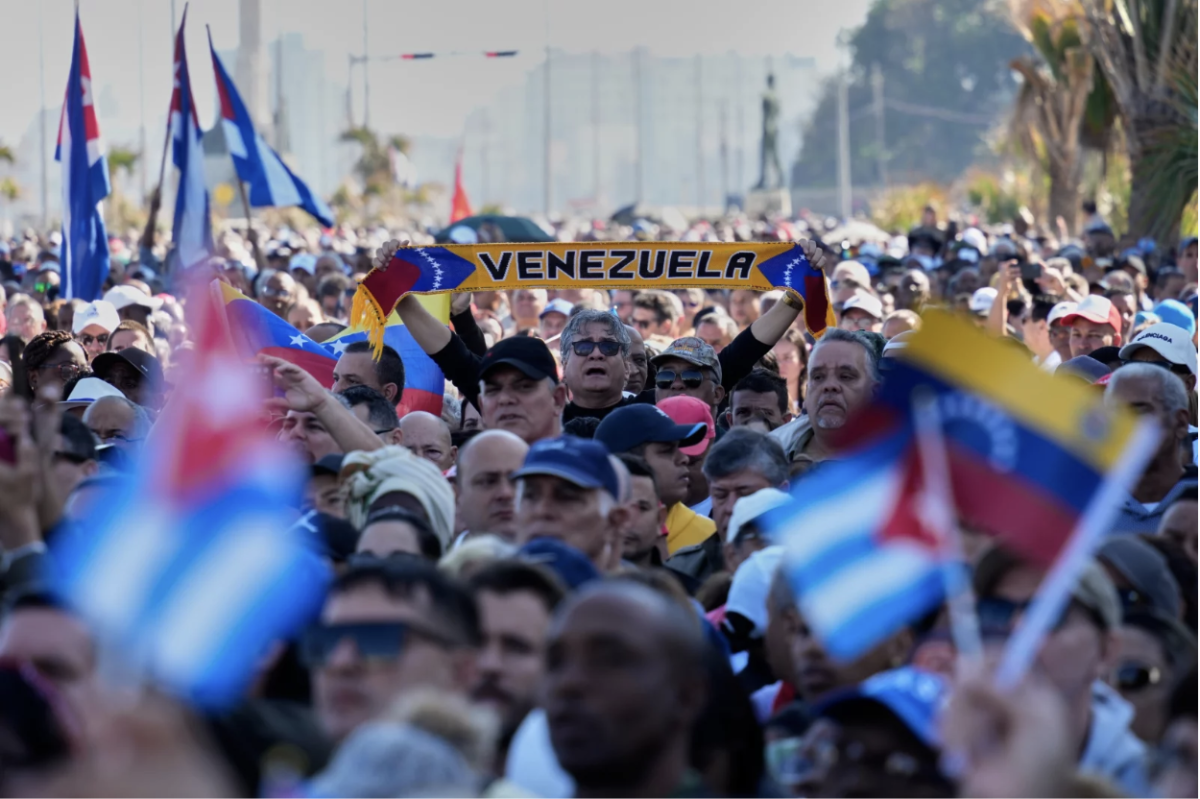
The situation in Venezuela has deteriorated into a prolonged humanitarian and political crisis marked by economic collapse, political repression and large-scale displacement affecting millions of lives. What was once primarily an economic and governance crisis has become deeply intertwined with U.S foreign policies — especially since President Trump’s first term when the United States adopted a “maximum pressure” strategy toward Venezuela that included sweeping sanctions and threats of military action. U.S involvement in Venezuela has done more harm than good, worsening the country’s humanitarian crisis and harming more citizens than the intended political targets.
One of the clearest ways U.S. policy has exacerbated hardship for Venezuelans is through sanctions that limited the country’s access to its primary source of revenue. Before recent escalation, the U.S. imposed extensive economic sanctions on Venezuelan oil and financial sectors in an effort to weaken President Maduro’s government. These measures reduced oil production and state revenues, constrained imports of vital resources, and deepened shortages that affected everyday life for ordinary citizens. While Venezuela’s economic collapse began before sanctions due to years of mismanagement and corruption, the sanctions intensified the crisis by accelerating revenue loss and limited the government’s capacity to respond to humanitarian needs (Council on Foreign Relations).
Another major consequence of U.S. involvement is the humanitarian displacement crisis that has unfolded. The collapse of the Venezuelan economy and the worsening instability — including inflation that peaked over 600% since last year — has driven millions to flee the country. Nearly 7.9 million Venezuelans have become refugees or migrants amid the ongoing crisis. This is one of the largest displacement emergencies in the world with families forced from their homes as basic needs go unmet (UNHCR).
Beyond economic pressure, recent U.S. military escalation, and its evolving “maximum pressure” strategy have further destabilized the region. This approach revived confrontational rhetoric and operational tactics that echo past U.S. military interventions, such as in Iraq and Panama, shifting from sanctions and diplomacy to over force without clear international legal backing and raising serious concerns about regional stability and civilian risk.
The escalation culminated in the capture of President Maduro, marking a dramatic shift from indirect pressure to direct intervention in Venezuela’s leadership. While framed as a decisive step toward restoring democracy, the operation introduced new uncertainty rather than stability, leaving unanswered questions about legitimacy, succession and governance. The sudden removal of prominent leaders intensified fears or power vacuums, retaliation and prolonged unrest, particularly for civilians already facing food insecurity, displacements and violence. Instead of creating a clear path forward, Maduro’s capture highlighted the risks of military intervention in fragile states and reinforced concerns that U.S involvement prioritizes short-term political objectives over long-term humanitarian outcomes (UN).
Supporters of the U.S involvement argue that sanctions and other tools are necessary to restrict the Maduro regime’s access to power and create leverage for democratic reforms and accountability. The Council on Foreign Relations notes that U.S. sanctions were intended to cut off critical financing and send a clear signal against authoritarian control, framing them as part of a broader policy to pressure the Venezuelan government toward change.
However, despite these intentions, sanctions and recent U.S. military actions have not produced a stable democratic government in Venezuela and have instead worsened humanitarian conditions, undermining the claim that such intervention benefits Venezuelans. United Nations experts and international voices have condemned parts of U.S. military involvement as violations of international law and harmful to civilians, highlighting that coercive measures have yet to deliver the promised democratic outcomes and instead have deepened suffering and instability.
In sum, while U.S. involvement may be framed as an effort to promote democratic reform, the real world effects show a pattern of increased human cost and geopolitical volatility, suggesting that the strategy has done more harm than good for the Venezuelan people.