
Irvington’s ELD, or English Language Development class, is a program designed to help multilingual students gain the skills they need to participate in school and to achieve English proficiency. At the beginning of the 2025-2026 school year, Irvington’s ELD program underwent several changes as the administration navigated district and state requirements.
Because the state of California requires English learners to take an ELD class as well as an integrated English class, Irvington adjusted its program to comply with those requirements. The school has adapted by allowing ELD 3 students to also take a College Prep English class in addition to ELD, while ELD 1 and 2 take a supplemental Language Arts class.
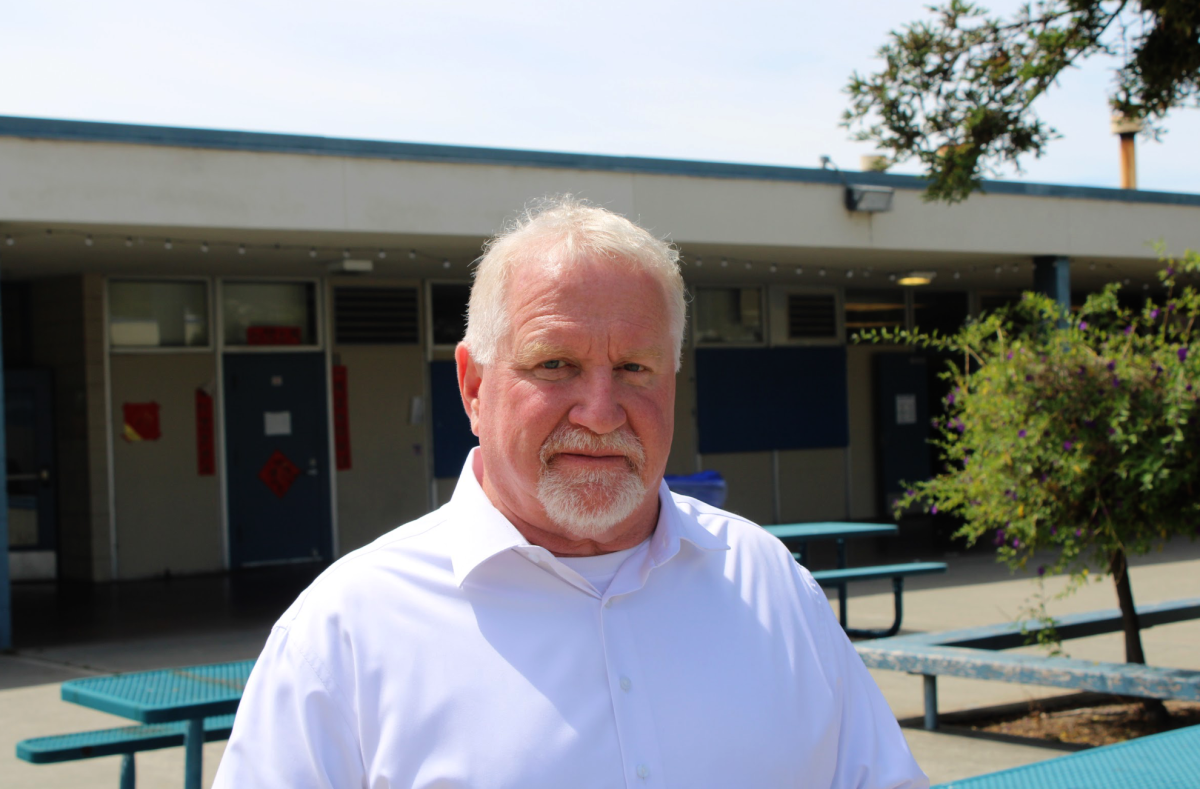
Assistant Principal Ms. Howell discusses how this impacts the school’s schedule, “It’s just different. It does not make it complicated; it just gives the newcomers an opportunity to take a CC English class alongside their ELD class. For example, ELD 3 students now have the chance to also take English 11 as well, just like the mainstream students.”
Separate decisions made at the district level also impacted ELD scheduling at Irvington. Over the past five years, newcomer and low-intermediate level English learners had been in one combined class, but in the summer before the 2025-2026 school year, the decision was made to separate this into different periods of ELD 1 and ELD 2. However, due to low student enrollment in ELD 1, the district combined these periods into one class again.
Mrs. Reddy, who has taught this combined ELD class at Irvington for the past five years, shares that she has been advocating for the separation of ELD 1 and 2 classes, as this would help meet the learning needs of individual students with different skill levels. She also acknowledges the financial constraints of the district. “Teachers are expensive, so staffing a class that only has four or five students in many ways, on paper, doesn’t make sense.”
Teachers have also expressed how combining these two classes could impact the opportunities and learning comprehension of early English learners. Mrs. Reddy shares her insight on the situation, “The newcomers who really have no exposure or experience learning another language, especially English, are often lost and bored because they don’t have enough of those skills to understand what we’re doing in class.”
The process of adjusting to these changes was not seamless, as they came well into the beginning of the school year, impacting student schedules, teacher prep periods, and lesson curriculum. Mrs. Reddy adds, “I think sometimes when these changes are made, it’s not just the students who are in the classes that are affected; it’s the whole school community. It happened at a time when we were settling into routines. I found out about these changes on a Tuesday night, and the schedules had been changed by Friday [that same week].”
Beyond Irvington, broader concerns about federal ELD funding were raised throughout California districts over the summer. In June of 2025, the Trump administration froze $6.8 billion in federal education funding that was due to arrive on July 1, raising uncertainty about programs like ELD. However, in late July, the funds were later reinstated.
Christie Rocha, FUSD’s Director of Federal and State Programs, noted that this did not end up impacting the district, commenting, “The funding was reinstated at the federal level, which then allowed California to issue funding to school districts.” She adds that California’s Local Control Funding Formula (LCFF), which is funded through a combination of local property taxes and state funding, continues to provide supplemental and concentration grant funds to support multilingual students.
In the meantime, Irvington staff and students continue to navigate structural changes, such as combined classes and supplemental English courses. These new changes come with challenges, but staff and teachers remain committed to supporting the various needs of English learners.