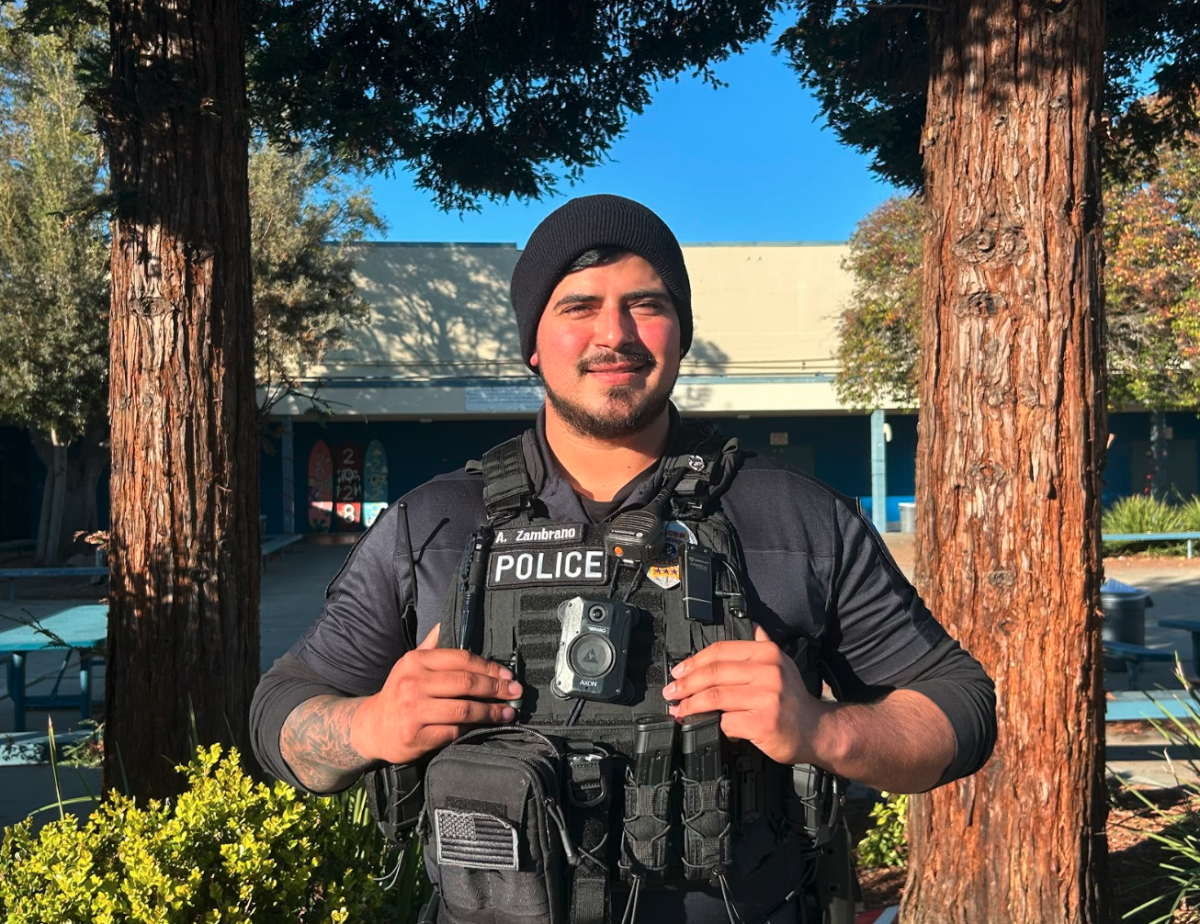
My normal role here as a School Resource Officer, obviously, is to keep the school safe. I’m not just in charge of Irvington High School, but I’m also in charge of Horner Middle School, along with five other middle schools spread out throughout the FUSD. Outside of making sure that the school safety is priority, we make sure that any possible crimes that are alleged, any possible bullying, or any possible victimization of any means, is discussed and interviewed about. So if there is a student coming up to me saying that, “Hey, something happened last weekend,” we would investigate that to the fullest and make sure that it’s a factual report and not just somebody saying something about another student because they don’t like them. Alongside that, having a presence in schools is important.
When I investigate something, it can range from something small like a stolen bike to something a bit more interesting, like this one case that recently even made national news. A guy trespassed onto one of the school grounds I cover, and that one incident led to a huge investigation. We eventually learned that he was wanted by 16 agencies across the Bay Area. It was going to schools, blending in with the staff, stealing credit cards, then using them to buy stuff before heading back home. He did this about 15 times, but I was able to track one of the stolen credit cards to Best Buy, pulled camera footage, matched the photo with staff who saw him, then tracked down the rental car he was using. That led me to Walnut Creek, where he returned the car, and that’s where I arrested him. That whole process took about a month. No matter the size of the case, we treat it seriously. I want the victims to feel heard and get justice.
Working at different schools feels like different stages. Elementary school is more easy going, middle school is a mix of “let’s have fun” and also “you’re starting to deal with real-life stuff”. Irvington is different because you’re all basically young adults, so a lot of my job becomes educating and preventing problems before they turn serious. For example, fighting happens at school, right? It’s not unheard of. But the moment you turn eighteen, that same fight can get you arrested, and a lot of kids don’t realize that.
The most rewarding part of the job for me is mentoring. I’ve always been told this growing up: everyone is essentially a book. The first page is how you present yourself, your style, how you look. The second page is how you act and carry yourself day to day. And then there’s a few people who actually read the chapters in your life. And that’s the important part, which is to be able to understand, communicate, and bond with people. Obviously, I love being a cop out on the street and catching bad guys, but it’s not as rewarding as being able to help out people who are in need, whether it’s they’re dealing with a crisis in their life, they have some family issues, or guiding them when they’re overwhelmed, those moments are what make this career meaningful for me.
My biggest advice to students is to control your emotions and your environment, because you can’t control what your friends choose to do but you could always control what you do. A lot of the time, students follow their friends into something they don’t agree with just because they don’t want to be the one to say no, but saying no is always an option that can keep you out of situations that put your safety and future at risk. When students understand that they don’t have to go along with everything and can make their own decisions, not only does it make their lives safer, it also makes my job a whole lot easier.